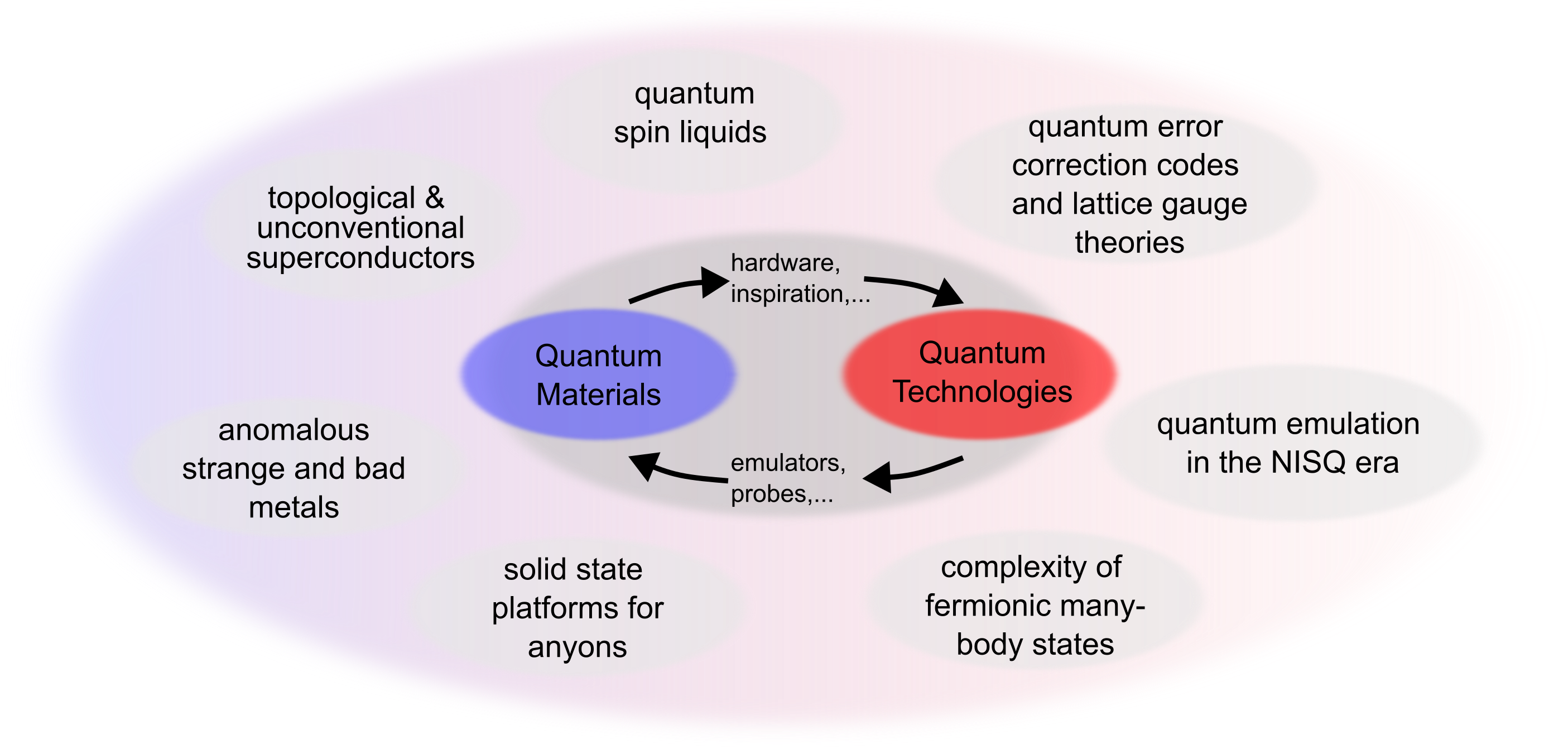
Driven by the fascination for collective quantum many-body phenomena, at the König group we aim to harvest synergies between quantum materials science and the most recent quantum technological advances. The immediate cycle of synergies between quantum materials and quantum technologies involves the solid-state hardware for many quantum devices and computers, which in turn are used in detecting and simulating novel condensed matter phenomena. On a higher level, a fruitful conceptual cross-pollination between fields leads to a variety of research directions:
- Exotic two-dimensional materials: Gluing quantum spin liquids to superconductors and metals.
- Strong correlations in topological insulators and superconductors: Constructing long-range entanglement.
- Mesoscopic quantum design: Solid-state quantum simulation.
- Quantum computing of, with, and for fermions: gate-based quantum simulators of electrons.
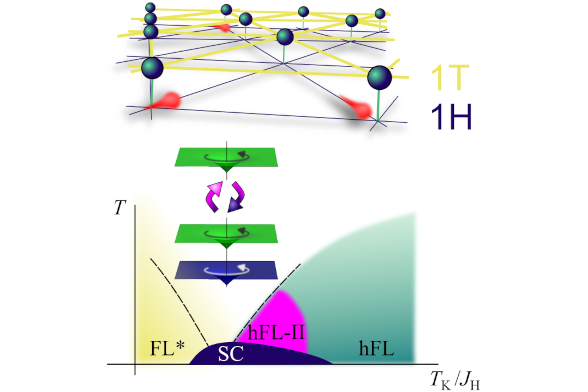
Exotic 2D Materials
The interplay of two-dimensional quantum magnets with metallic or superconducting two-dimensional materials.
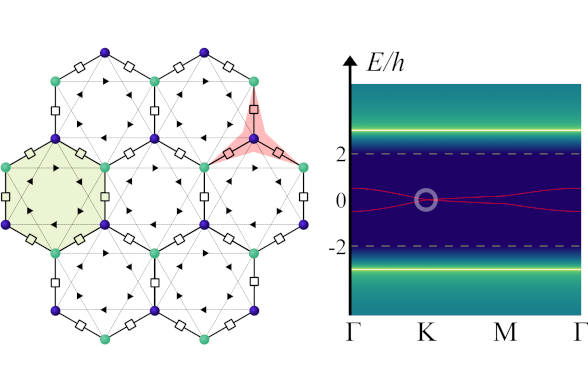
Topology
Topological phases beyond the mean-field approximation, in particular the interplay of Goldstone modes and fermionic topology.
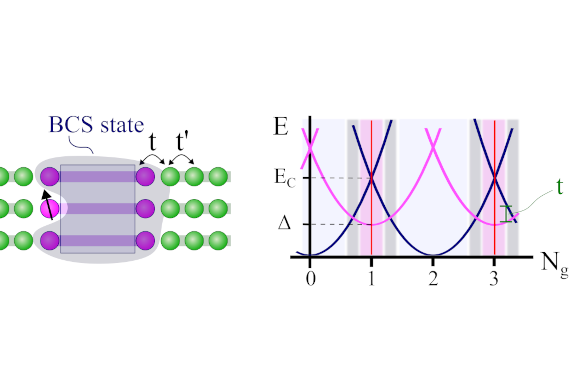
Mesoscopic Quantum Design
The controlled quantum design of quantum systems in order to emulate or create novel quantum phases of matter.
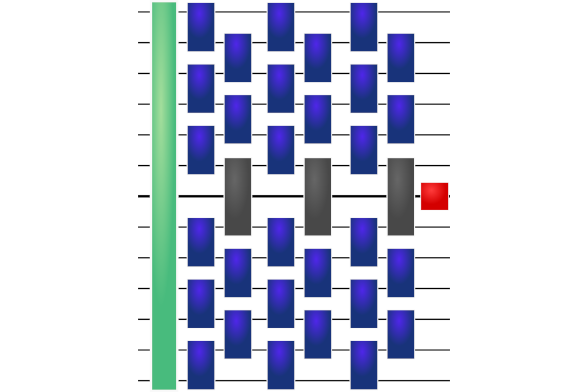
Fermion Quantum Computing
Investigating quantum circuits emulating quantum many-body problems of correlated electrons.